
The night before my wedding, I was talking with my sister, who is a Greek Orthodox nun, about my preconception diet. She was happy to hear that I’ve been eating lots of red meat and such.
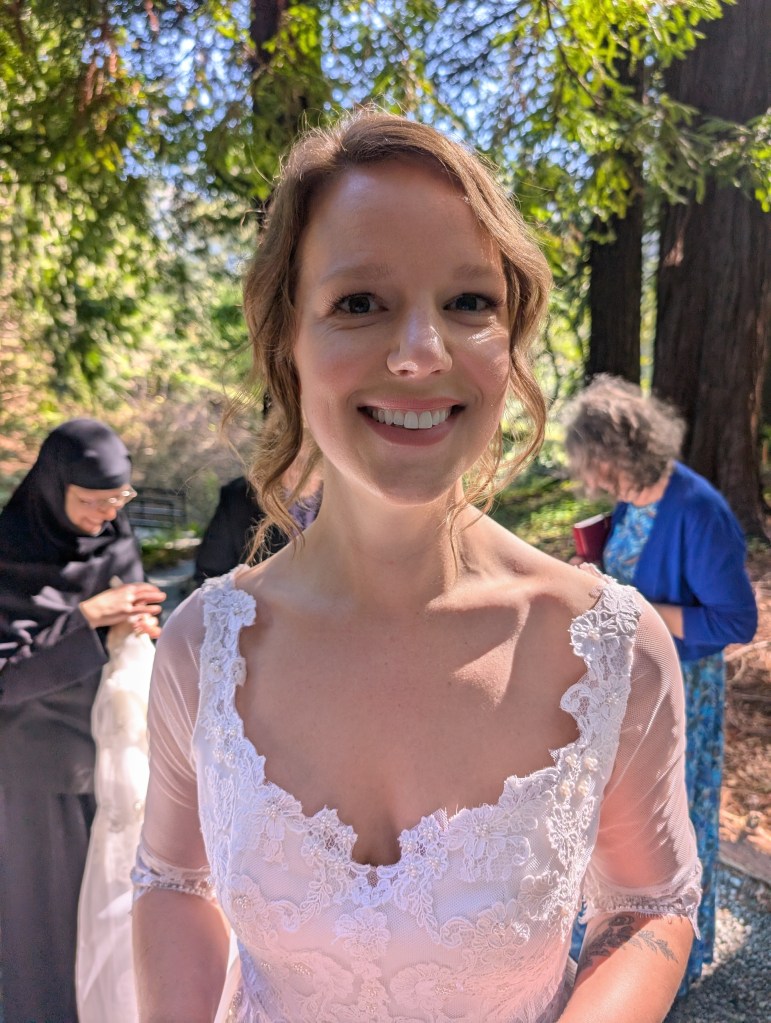
She—a vegetarian, according to monastic practice—explained that in Europe at least, everyone understands the link between food and fertility.
“Of course I don’t eat red meat. The red meat goes to those who are reproducing or going out and fighting.”
This was in terms of what can be seen in other primate societies: there are those who get the meat, and there are those who “suck up” (her words) to those with the meat in order to survive. As a nun, she is in the sucking-up position, the pacifist position, and does not need to have that kind of energy.
I saw crystal-clear validation in this explanation. I don’t necessarily need to eat red meat and fish oil forever—although maybe I will. This is just a crucial time, akin to going out and fighting for my life. The body needs extra to do extra.
“Conception DIY” sounds funny, doesn’t it? A bit redundant?
But given how people think of IVF (“if we can’t do it ourselves, technology will do it for us!”), it’s becoming more and more radical.
Like “Birth DIY,” Conception DIY involves basic, natural human functions, plus some ancient wisdom.
For example: the unstoppable human impulse to have sex, much like the unstoppable human impulse to push a baby out, meets the ancient wisdom of giving the most nutrient-dense foods to the reproducing members of the population—much like the ancient wisdom of protecting space for birth in a private, dark, sacred space.
I don’t know when people started referring to the conception process as “trying.” My sense is that it is directly connected to some point in the sharp increase of “fertility treatment” in the last decade.
Call me arrogant, but… there is no “try.”
Would I call it “trying” when I spent two years building nutrient reserves and doing everything I could to balance my hormones, improve my menstrual cycle, and strengthen my body?
Would I call it “trying” when we set aside dedicated time to be together after getting married and thus opening the possibility of welcoming children?
Okay, yes, I suppose that’s all trying. But not in the sense of throwing a dart and hoping it lands.
Common narratives around conception, pregnancy, birth, and all kinds of behavior are chalked up to luck. And then—infuriatingly—technologies like IVF or surgical birth are held up as the answers, when IVF works less often than natural conception, and surgical birth results in more complications than natural birth.
My generation seems to be painfully aware of the ways in which our childhoods created our adulthood behavior, so maybe we’re out of these woods, but—evil people are not born evil. Their experiences of the world made them this way. It’s not luck.
Yet, my generation does not seem to see the connection between lifestyle choices and fertility, or energetic environment and physical outcome.
Every birth story I hear that involved some sort of complication hits an increasingly obvious wall in my mind: I see how that complication was caused. And they call it random. They call it luck. Better to be in the hospital, just in case! Being in the hospital is the case that caused the problem.
As for getting pregnant “on the first try,” I could credit the physical preparation and reality that we created to allow it to happen, and I do. But I also credit the spiritual, because without that realm none of it would matter.
This is the humility I’m trying to find somewhere in my pride: there are no guarantees, even if I do everything right. I’m an extremely good student, but that doesn’t mean that I can control life.
Part of Birth DIY—and Conception DIY—is the understanding that life necessitates death.
As we take responsibility for ourselves, we also give up responsibility for Everything. We evaluate and accept what is our business, what is someone else’s business, and what is God’s business. God’s business includes life and death.
As I dream up and pursue my most blissful visions, I also acknowledge that they, and I, might die at any time. This helps stoke gratitude, counterintuitively.
So, I’ve finally entered the Conception phase. I considered myself pregnant as soon as I thought it might be possible (immediately after which I proceeded to fall down the stairs!), and confirmations continue to roll in.
I feel remarkably at peace, and not at all motivated to get back to running and dumbbells as anticipated. I’m just enjoying my slightly weird food cravings (peanut butter oatmeal in the bath; miso soup mixed with yogurt) and the daydreams of what might be.
I never took a pregnancy test, and I don’t plan to tell any doctors. I don’t want ultrasound anywhere near me, and I don’t need badgering about gestational diabetes or the supposed size of the fetus. I’ll do what I need to do to get a birth certificate, but all I need from a midwife is a “diagnosis of pregnancy” at some point.
(I’ve also spent the last two years learning everything about birth, only to find that the best course of action is to leave it alone.)
Thus the continuum of conception to birth begins! I could birth tomorrow, or in late December, or any time in between. I feel relieved, happy, and clear.
As opposed to wedding planning, which involved escalating expenditures and decision-making, pregnancy is utterly slow and mysterious. The decisions have been made. The expenditures will escalate later. For now, all we need is what we already have.
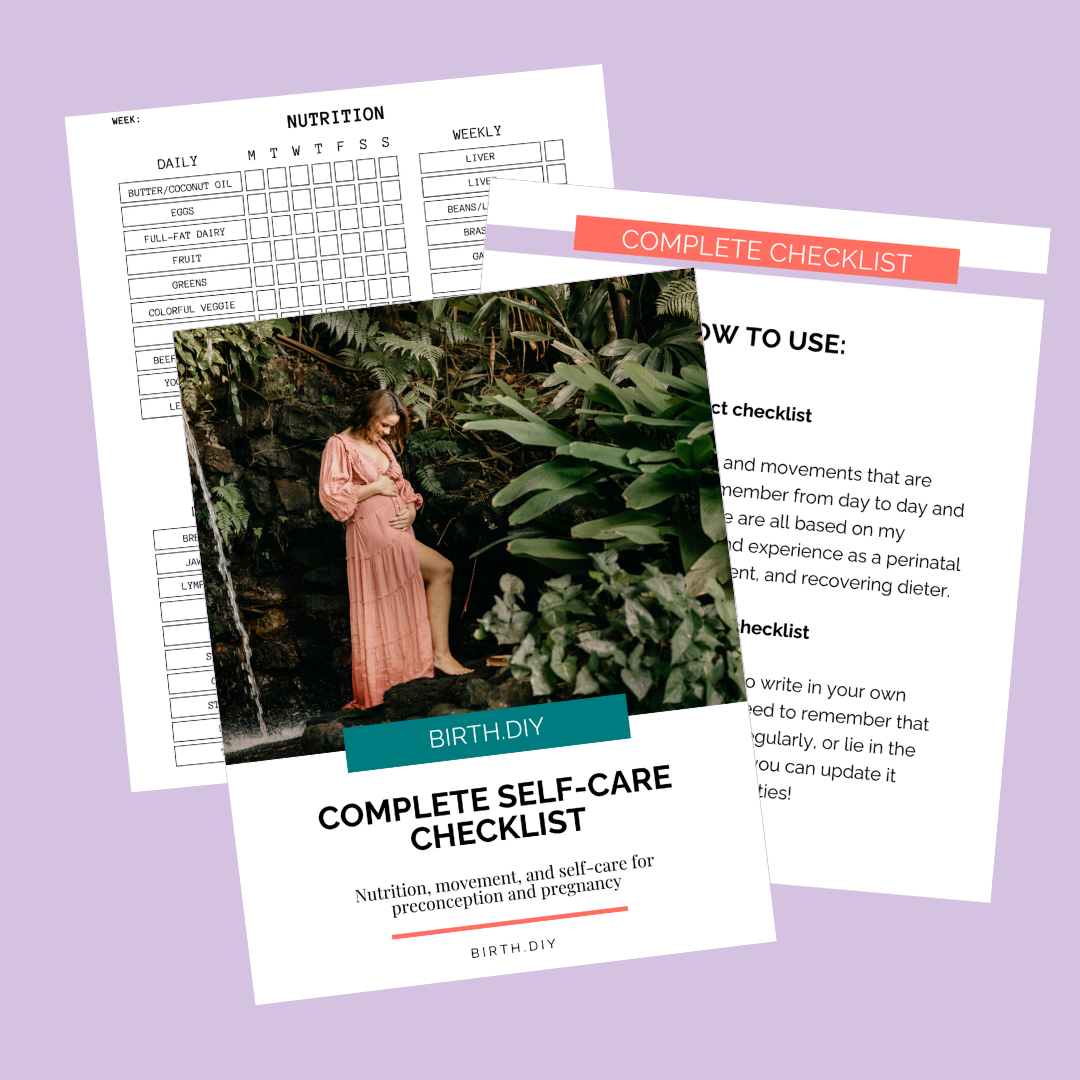
For my personal nutrition and exercise checklist for fertility, click here.
To sign up for my workshop, “Breaking Addiction, Healing Your Life & Nourishing Yourself for Fertility Using Radical Self-Care, Masculine Structure & Feminine Understanding,” click here.
 Birth.DIY